
API Women’s Health
The AAPI Women’s Health Coalition is a project designed to provide direct service, create system change, and create a sustainable group of diverse stakeholders committed to changing health outcomes for AAPI women. The program is funded by the Minnesota Department of Health through their Eliminating Health Disparities Initiative. We work to increase awareness of breast and cervical cancer prevention strategies and increase access to screening opportunities.
If you’d like to get involved, fill out this form!
-
Our program goals are to:
Increase knowledge and awareness of preventive health behaviors within the community.
Build a stronger healthier community by increasing access to breast and cervical cancer screening opportunities for AAPI Women.
Create a coalition of diverse stakeholders committed to changing health outcomes.
-
1:1 Education and Support on breast and cervical cancer prevention strategies (screening, vaccination, and healthy lifestyle).
Free Mammograms for AAPI Women 40+.
Small group education sessions to help women gain the tools and knowledge to advocate for their well-being.

Culture of Care Assessment: What We Learned from API Women and Healthcare Providers
The Culture of Care Assessment highlights a clear message from both patients and providers: culturally sound care depends on relationships.
API women in Minnesota want providers who communicate clearly, listen carefully, respect cultural beliefs, and create space for shared decision-making. Providers in Minnesota are interested in strengthening these skills and learning more about the diverse communities they serve.
How do API women define a positive preventive healthcare visit?
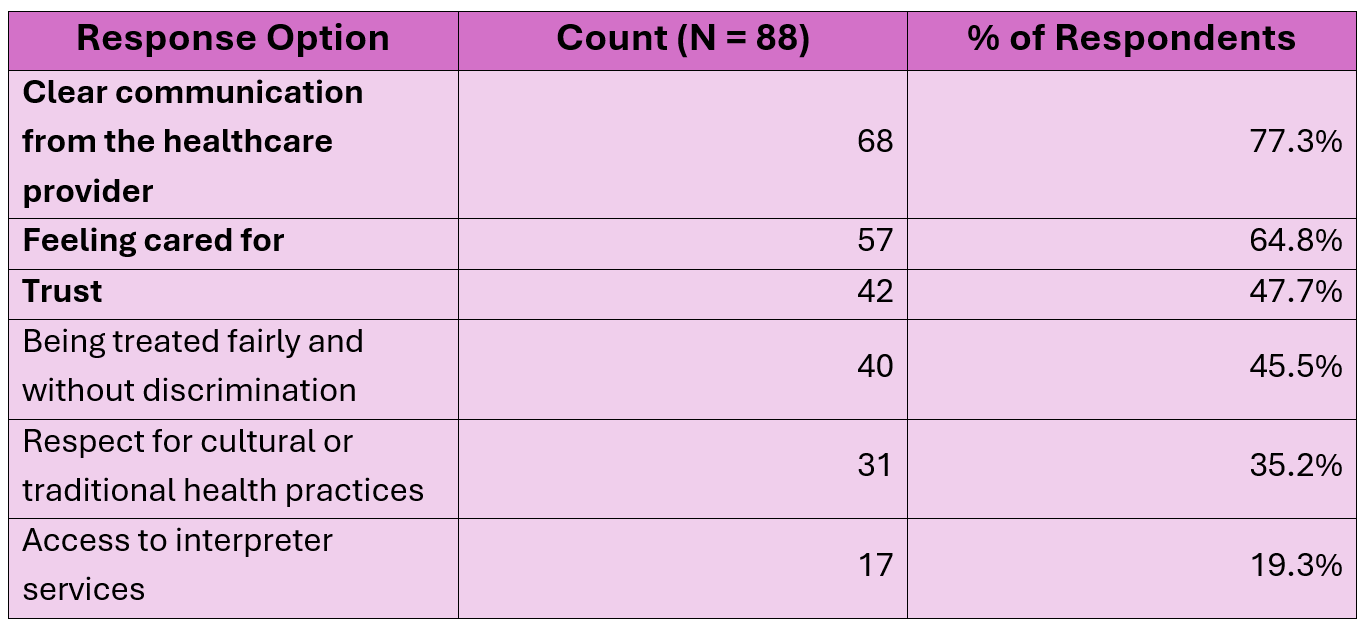
Participants consistently identified communication and trust as the foundation of a positive healthcare experience.
When asked what factors were most important during a healthcare visit, the most frequently selected responses were:
What barriers do API women encounter when accessing preventive healthcare?
Barriers were often less about access to healthcare and more about whether patients felt understood, respected, and able to fully participate in and direct their care. While most respondents reported positive experiences overall, several recurring barriers emerged. They include:
Communication Barriers
Feeling rushed during appointments
Difficulty asking questions
Limited opportunities to confirm understanding
Lack of culturally tailored health information
Language and Interpreter Access
Interpreter availability varies by language.
Family members are often used as interpreters.
Participants wanted more translated materials and clearer information about interpreter services.
Equity and Fair Treatment
Racial or ethnic discrimination
Gender-related bias
Concerns about modesty and privacy
Feeling dismissed or not taken seriously
Traditional Health Practices
Half of participants described using one or more traditional approaches including: herbal remedies, food-based healing, movement and bodywork, traditional or home remedies, spiritual and faith-based healing, meditation and mind-body practices, and traditional and community healers.
Where do patient expectations differ from provider perceptions and practices?
Several important areas of alignment emerged between patients and providers.
Providers recognized the importance of:
Respectful communication
Patient trust
Cultural responsiveness
Traditional healing practices
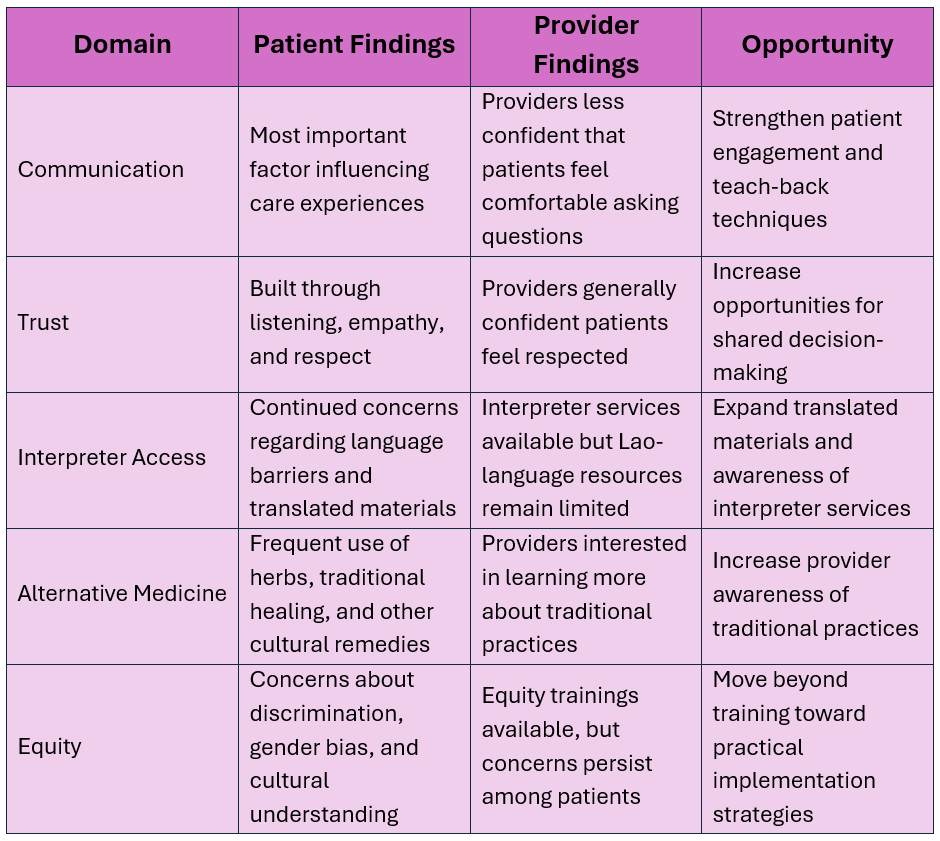
Providers also expressed strong interest in learning more about traditional healing beliefs and culturally responsive care approaches. However, several gaps emerged. Check out the table below that compares patient and provider findings.
Culture of Care Assessment Background and Purpose
The Culture of Care Assessment was conducted by the Lao Center of Minnesota’s (LACM) Women’s Health Program to better understand how Asian and Pacific Islander (API) women in Minnesota experience preventive healthcare and to identify opportunities for healthcare providers and systems to deliver more culturally sound care. The assessment included surveys from API women (N=89) and healthcare providers serving API communities in Minnesota (N=8).
This mixed-methods assessment explored five core domains:
Communication
Trust
Equity and Fair Treatment
Language and Interpreter Access
Traditional and Alternative Health Practices
Data for this assessment was collected and analyzed from March to June 2026. LACM’s Women’s Health team, along with members of the API Women’s Health Coalition, reviewed and provided feedback on the results. The findings will be used to guide future provider training, resource development, and community-informed strategies to improve preventive healthcare experiences for API women.
Thank you to all who participated in this assessment process!
Questions? Reach out to admin@laocenter.org